
The Revolution’s Moral Failure
For Whom the Bell TollsThis flow traces Pilar’s account of revolutionary justice turning into collective cruelty and the lasting shame that complicates the cause.
increasing Bearing strength in each event
 decreasing
Bearing strength in each eventdecreasingA Planned Reckoning
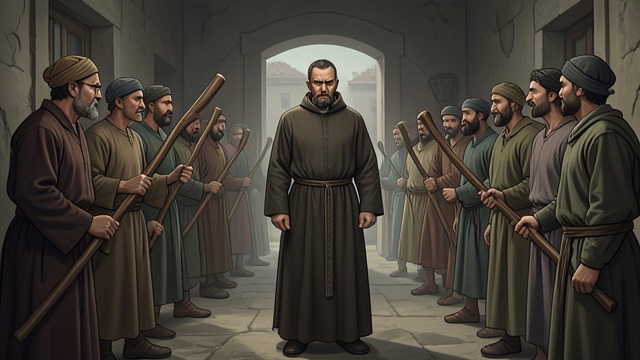
Order Before Violence
Pablo’s organization
Pablo arranges the seizure of fascists in the town and forms two lines of villagers with flails and clubs. The priest is asked to prepare the prisoners for death.
Collective responsibility
Pilar understands the idea that the people should share responsibility for the punishment. She also senses that the plan depends on restraint and order that may not survive the crowd’s emotions.
The First Executions
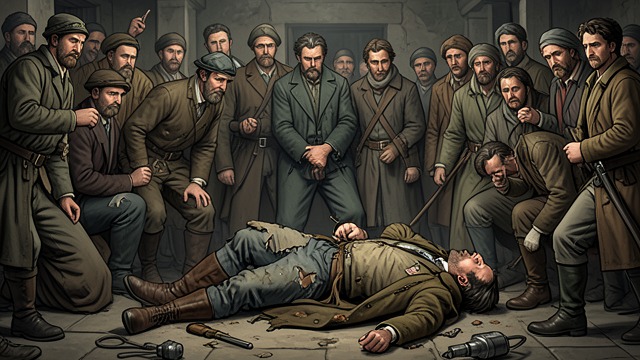
Violence Begins
A line breaks
Don Benito walks through the line and is beaten to death after a tenant strikes him. Don Federico is also killed as fear, mockery, and crowd pressure spread.
A changed atmosphere
The crowd moves from uneasy duty toward cruelty. Pilar recognizes that the process is no longer controlled by the principles that supposedly justified it.
Mockery Becomes a Weapon
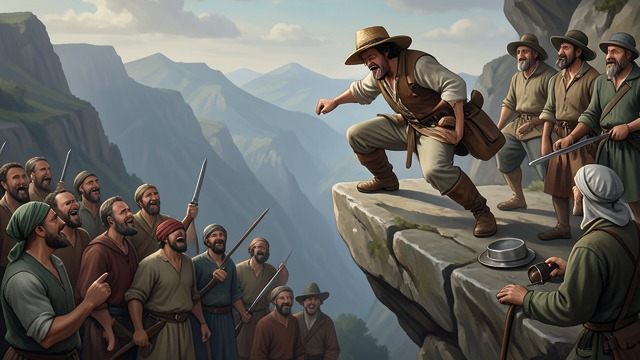
Humiliation and Death
Different victims
Don Faustino’s fear becomes a spectacle for the crowd, which mocks him before pushing him over the cliff. Other prisoners are attacked amid growing drunkenness and disorder.
Moral contagion
Pilar sees that the crowd’s jokes intensify the violence rather than relieve tension. Fear, resentment, and alcohol help turn punishment into a performance.
The Mob Enters the Hall
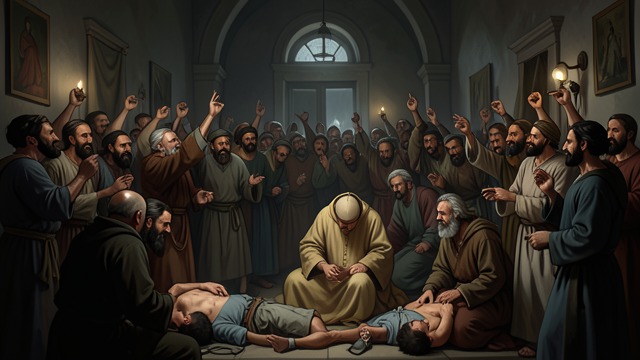
Restraint Collapses
Doors opened
The crowd presses into the town hall, where prisoners and the priest are praying. The people beat and kill them in a chaotic rush.
Pilar’s shame
Pilar is caught near the scene and cannot control the violence. She later remembers the episode as a failure that was ugly even where the revolution’s aims seemed just.
Memory Against Triumph
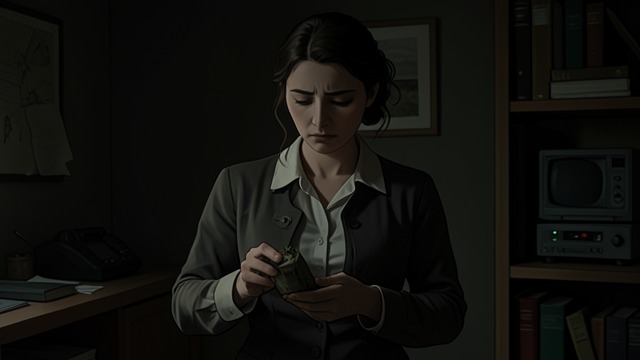
The Past Is Not Cleared
Telling the story
Pilar recounts the massacre to Jordan and Maria, refusing to reduce it to a heroic founding moment. Her memory includes victims, bystanders, and the crowd’s own degradation.
A warning for the present
The story complicates the Republic’s moral claims without equating every side. It shows that a cause can oppose tyranny while its supporters commit acts they must continue to answer for.
The day the village rises
That morning in the plaza
Later that morning
Toward the end of the day
Years later in the mountains
